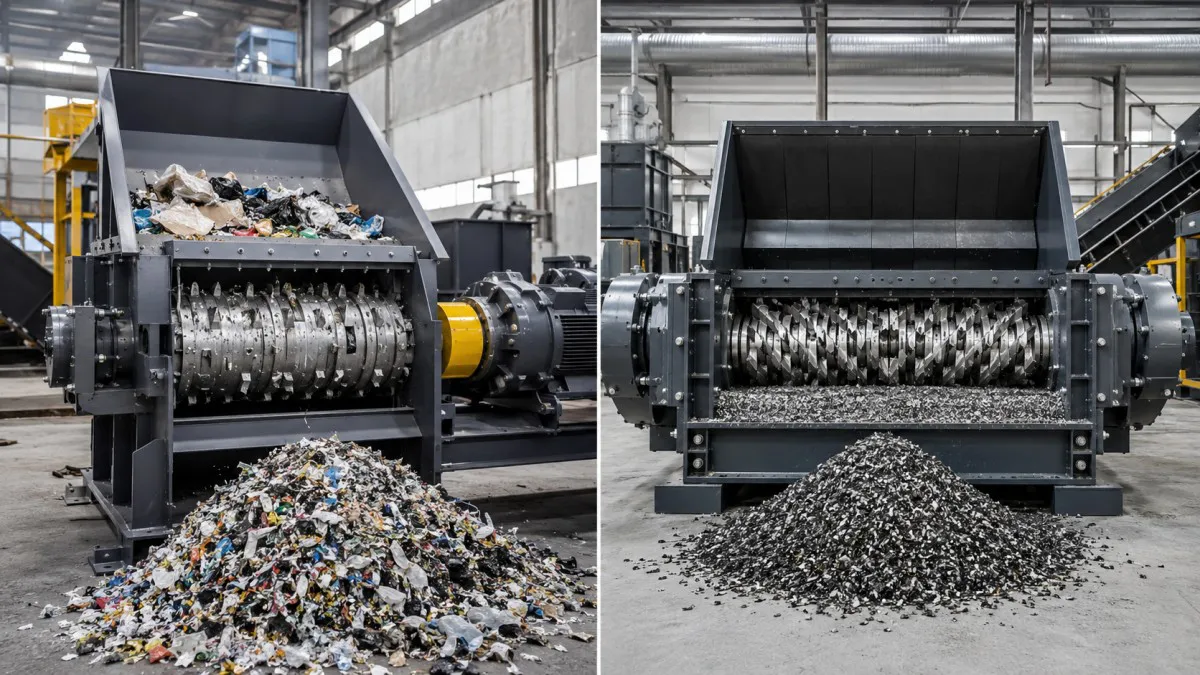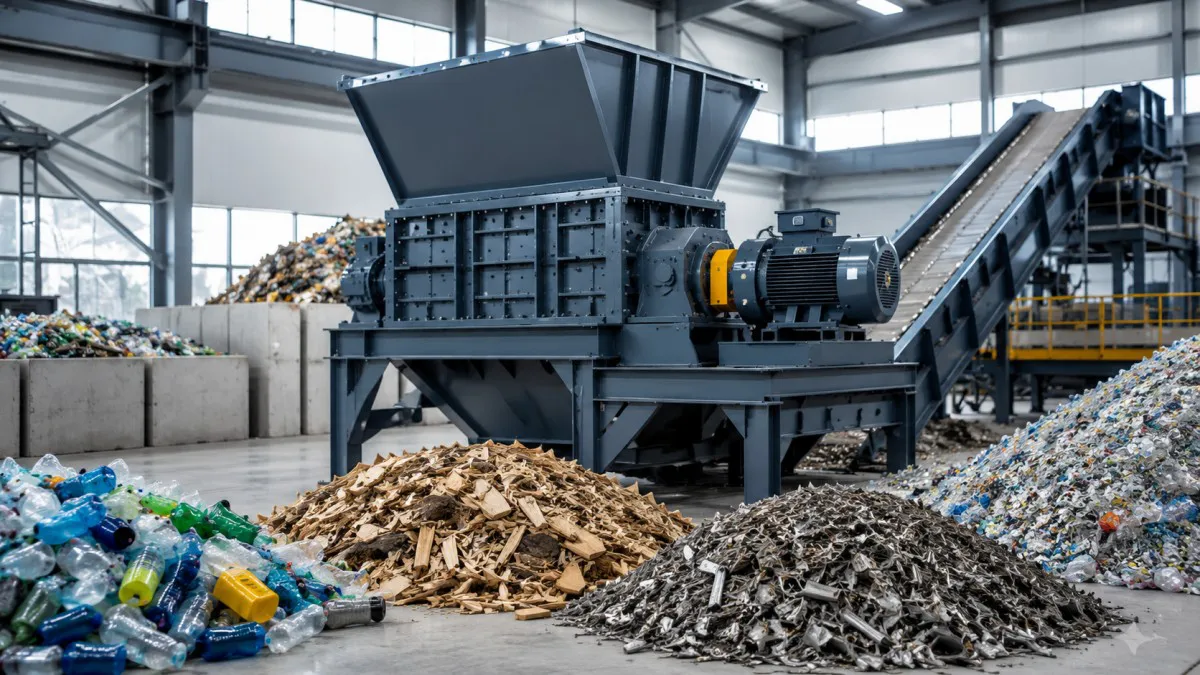
Choosing an industrial shredder is not simply a matter of comparing motor power or machine size. Two shredders with similar specifications can perform very differently when they are used for different materials. A machine designed for rigid plastic may not be suitable for mattresses, while a shredder used for wood waste may require a different cutting structure from one used for metal scrap.
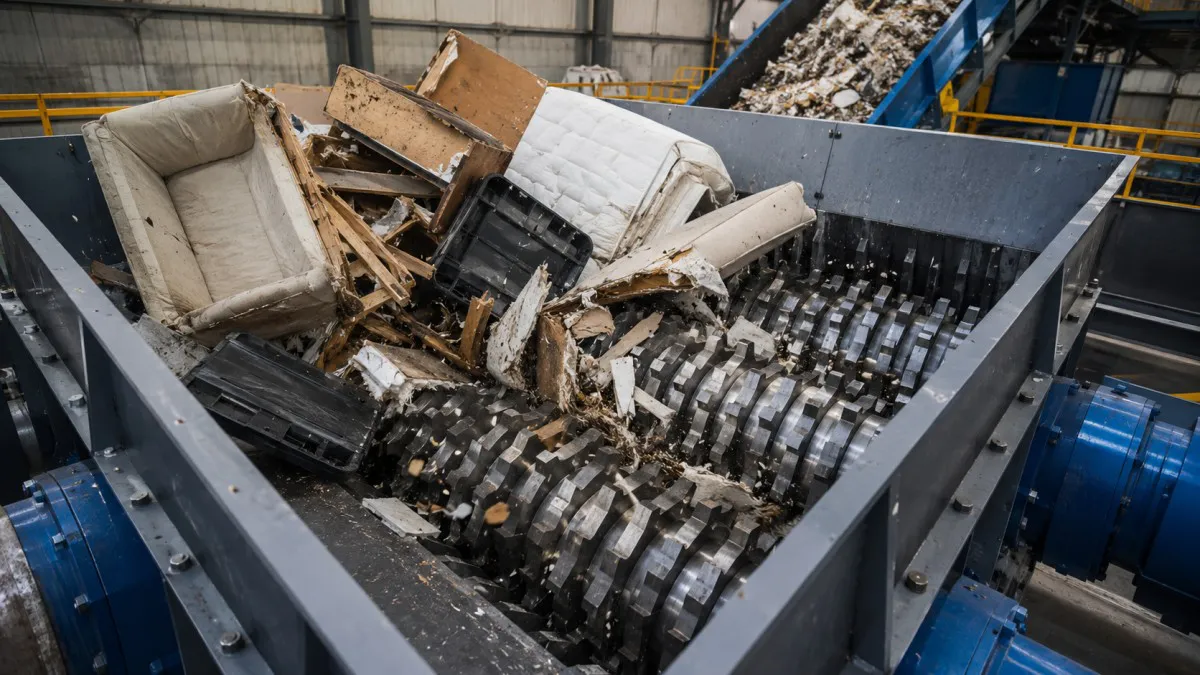
The first step is to understand the material itself. Size, density, hardness, moisture content and composition all affect how the machine works. Light plastic film tends to wrap around the shaft, bulky furniture requires a large feeding opening, and thick rubber products demand higher torque. Mixed waste is even more challenging because metal parts, fabric, wood and plastic may enter the machine at the same time.
Output size is another important factor. Some recycling projects only need to reduce the volume of the waste before transportation. In this case, a larger and less uniform output may be acceptable. Other projects require a controlled particle size for sorting, granulation or fuel preparation. These applications may need a screen, a secondary shredder or an additional crusher after the first shredding stage.
Capacity should be evaluated under real working conditions. Theoretical capacity is often based on clean and uniform material, while actual production waste can be irregular and difficult to feed. A stable feeding system is therefore just as important as the shredder itself. Belt conveyors, chain conveyors, loaders and hydraulic pushers should be selected according to the shape and weight of the material.
Buyers should also consider what happens after shredding. If the material will pass through a magnetic separator, trommel screen or air separator, the discharge size must match the downstream equipment. A shredder should be treated as part of a complete recycling line rather than an isolated machine.
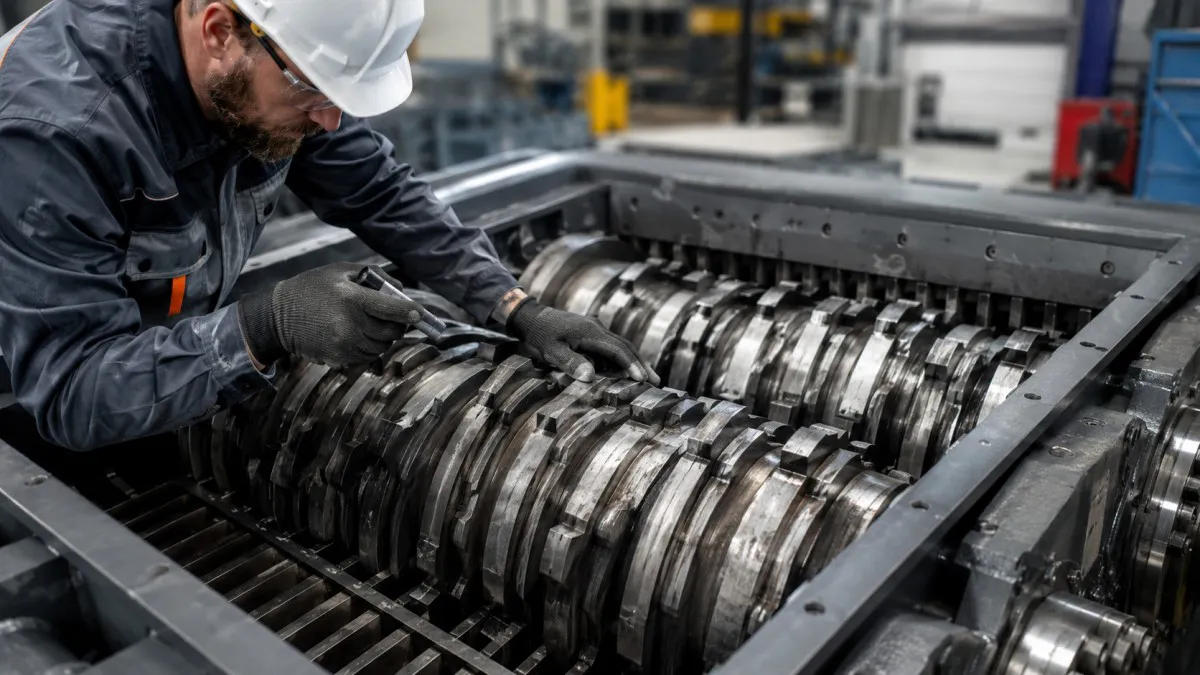
Maintenance requirements should not be overlooked. Blade replacement, shaft inspection, bearing lubrication and access to the cutting chamber all influence operating costs. A well-designed machine should allow technicians to inspect and replace wear parts without dismantling the entire system.
Before making a final decision, it is advisable to test the actual material. A trial run can reveal feeding problems, wrapping, excessive reverse rotation or uneven discharge. It also provides a more reliable picture of power consumption and production capacity.
The right industrial shredder is the one that matches the material, process and expected operating conditions. Clear information at the selection stage can prevent many problems after installation.