Single-shaft and double-shaft shredders are both widely used in recycling, but they are designed for different tasks. Choosing between them depends on the material, required output size and position of the machine in the production line.
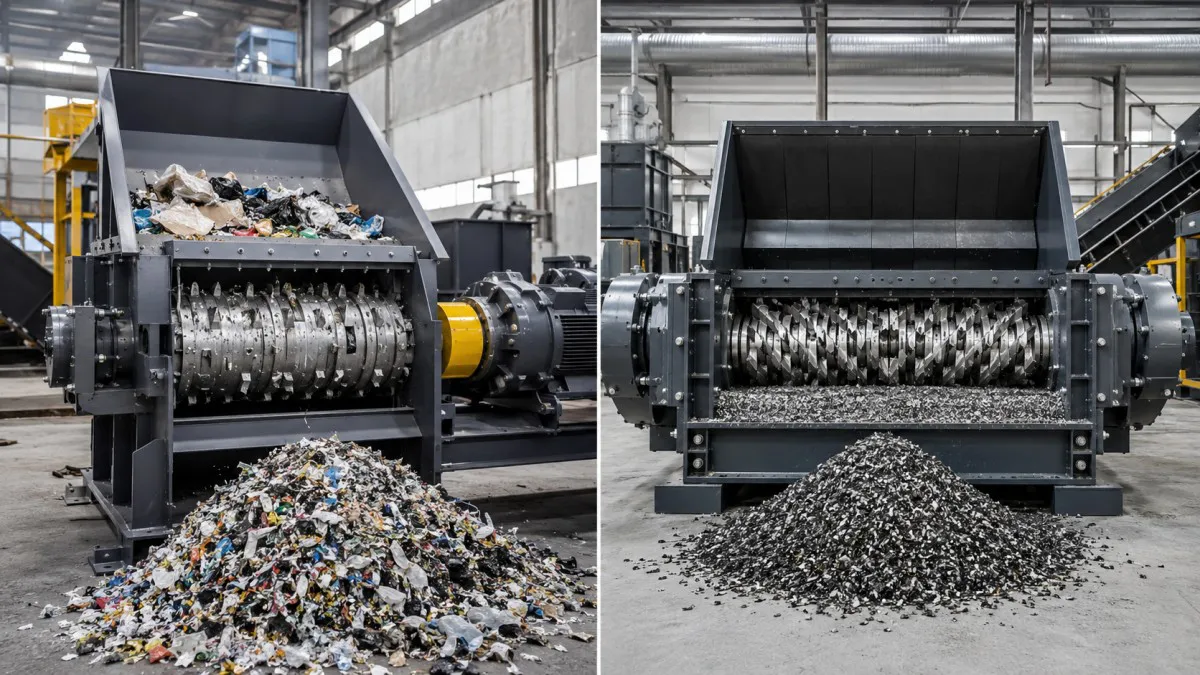
A single-shaft shredder usually has one rotating rotor, a hydraulic pusher and a screen. The pusher moves the material toward the rotor, where rotating knives cut it against fixed knives. Material remains in the cutting chamber until it becomes small enough to pass through the screen.
This design provides better control over discharge size. It is commonly used for plastic lumps, pipes, wood, film, paper and other relatively uniform materials. By changing the screen opening, users can adjust the output size within a certain range.
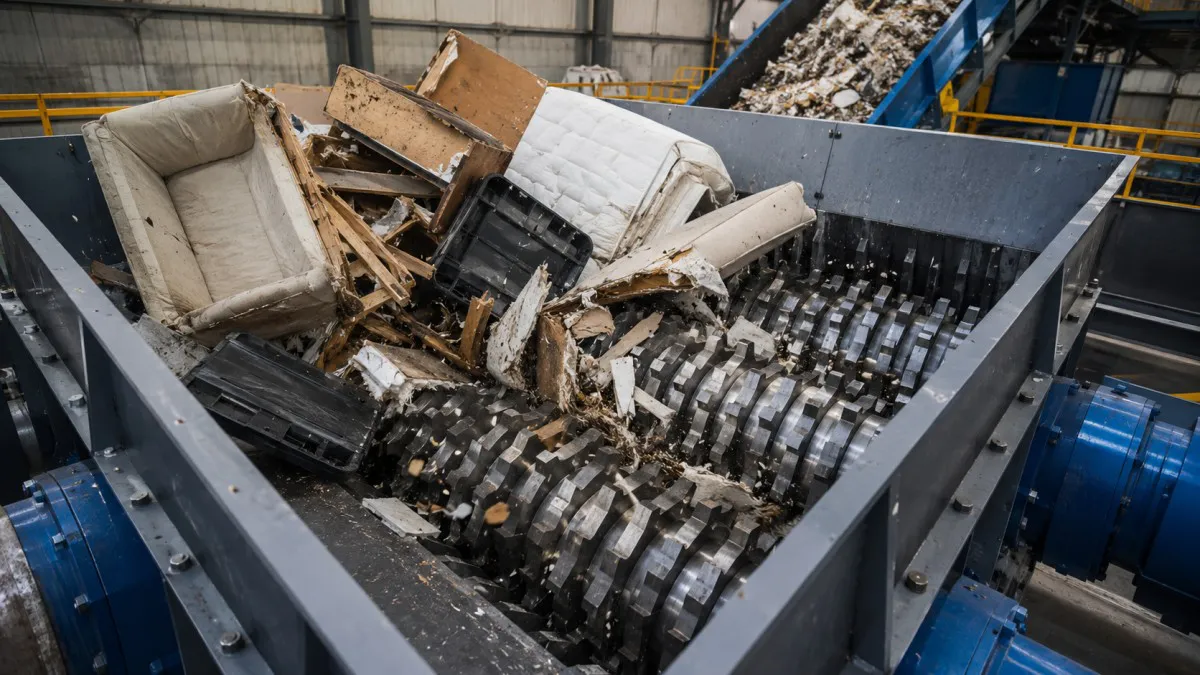
A double-shaft shredder uses two counter-rotating shafts. The material is pulled between the shafts and torn by the intermeshing blades. Most double-shaft machines do not use a screen, so the discharge size is mainly determined by blade width, hook shape and shaft arrangement.
Double-shaft shredders are often selected for bulky, mixed or difficult waste. Typical applications include furniture, mattresses, tyres, metal drums, household waste and industrial scrap. Their low-speed, high-torque operation gives them strong feeding ability and stable performance with irregular materials.
The choice is not always one machine or the other. In many recycling systems, a double-shaft shredder is used for primary size reduction, followed by a single-shaft shredder for more controlled secondary processing. This arrangement is common in waste fuel, plastic recycling and bulky waste treatment lines.
Buyers should also consider feeding behaviour. A single-shaft shredder depends on the hydraulic pusher, so the material must fit into the chamber and respond well to controlled pushing. A double-shaft shredder can often grip and pull in large objects more directly.
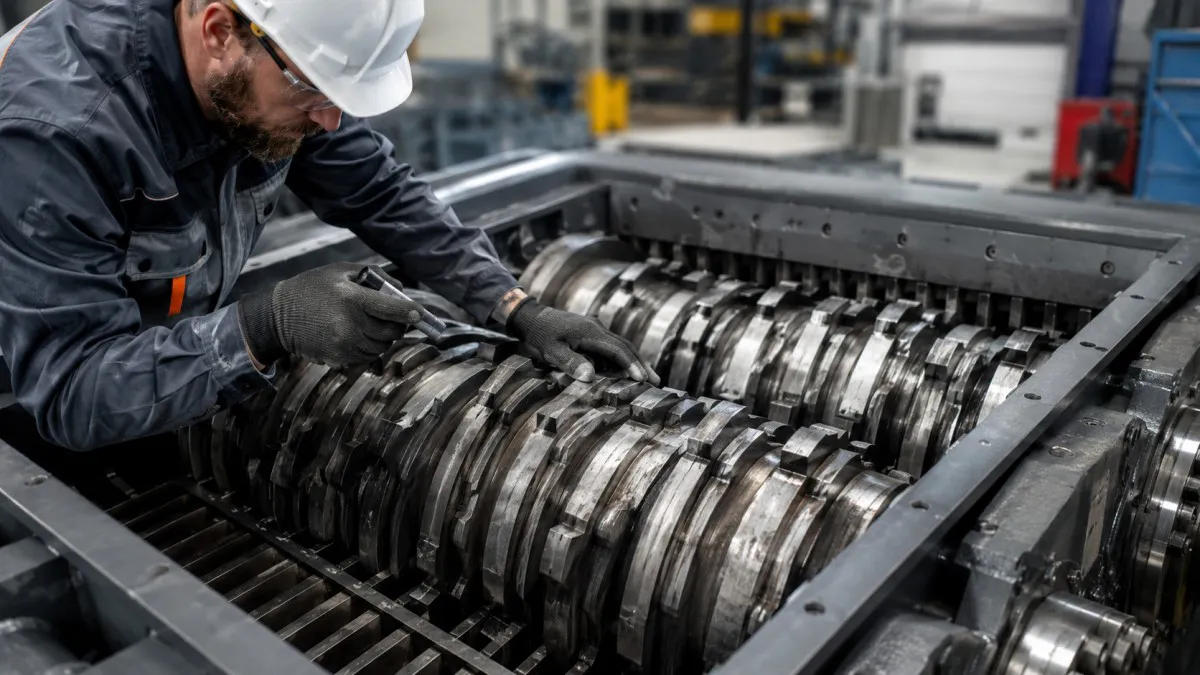
Maintenance costs vary with the application. Single-shaft machines may have more knives but smaller individual cutting tools. Double-shaft machines often use thicker, heavier blades and spacers. The cost should be evaluated according to blade life, replacement time and expected operating hours.
For clean, relatively uniform waste and controlled output size, a single-shaft shredder is often the better option. For large, mixed and irregular materials, a double-shaft shredder is usually more suitable.
The final decision should be based on a material test. Real samples can show whether the waste feeds smoothly, whether wrapping occurs and whether the discharge size meets the next process requirement.