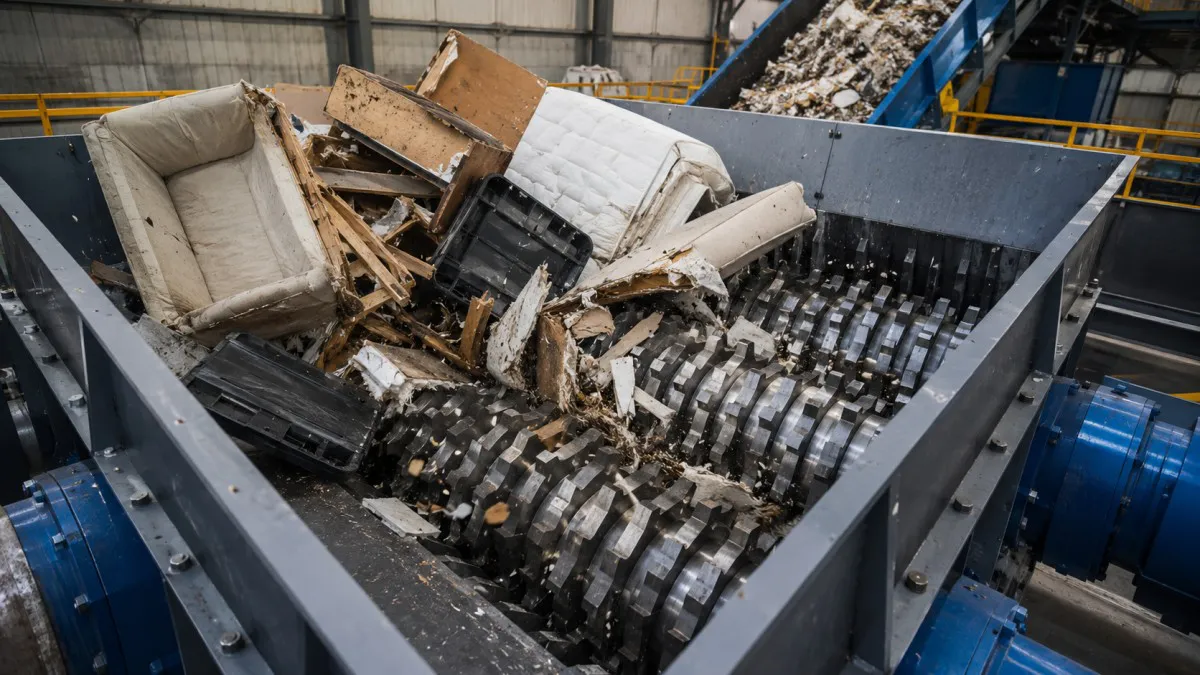
Bulky waste is difficult to transport, store and sort because it occupies a large amount of space. Old sofas, mattresses, wooden furniture, plastic containers and renovation waste often contain several different materials in one item. Before these materials can be separated or recycled, they usually need to be reduced to a manageable size.
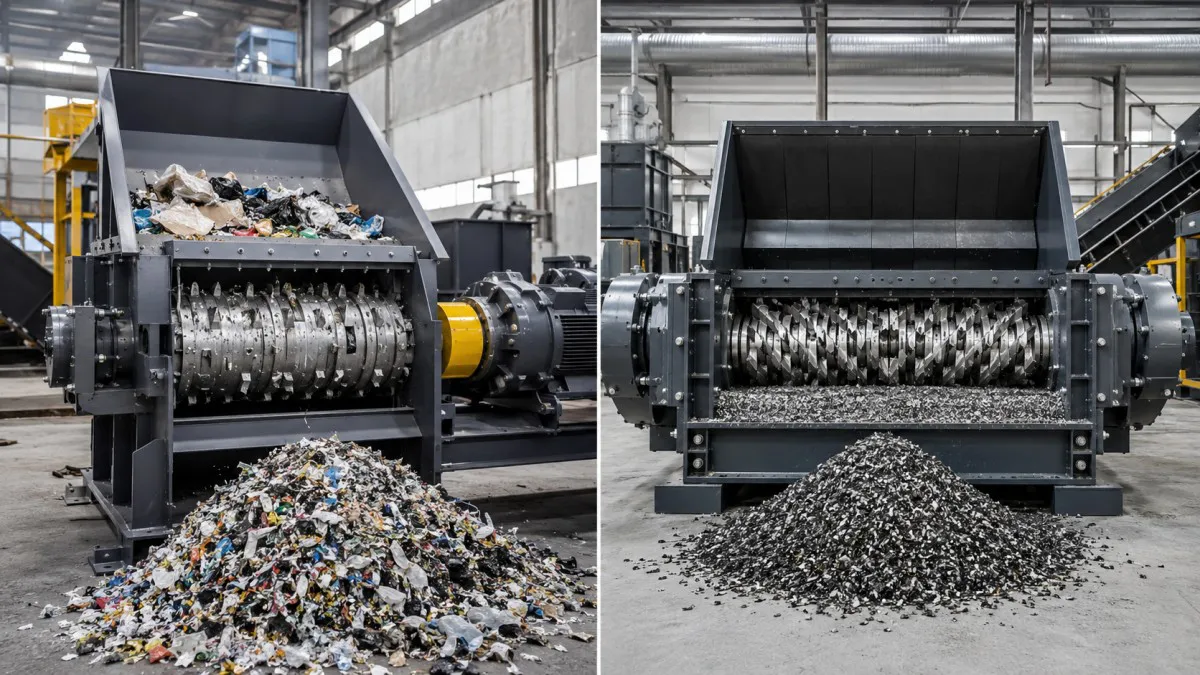
Double-shaft shredders are commonly used at the front end of bulky waste treatment lines. The two shafts rotate at low speed and pull the material into the cutting chamber. Instead of relying on high-speed impact, the machine uses cutting, tearing and squeezing forces to break down large objects.
This low-speed, high-torque design is particularly useful for irregular waste. A mattress may contain fabric, foam, steel springs and wooden parts, while a sofa may include metal frames, leather and plastic. The shredder must continue working even when the material density changes during the process.
One advantage of a double-shaft shredder is its strong feeding ability. The counter-rotating shafts can grip large objects and gradually pull them downward. This reduces the need for extensive manual cutting before feeding. A suitable hopper and feeding conveyor can further improve production efficiency.
The machine can also be equipped with an automatic reverse function. When the system detects an overload, the shafts reverse for a short period to release the material, then continue shredding. This helps reduce the risk of serious blockage, although unsuitable metal parts and hard foreign objects should still be removed whenever possible.
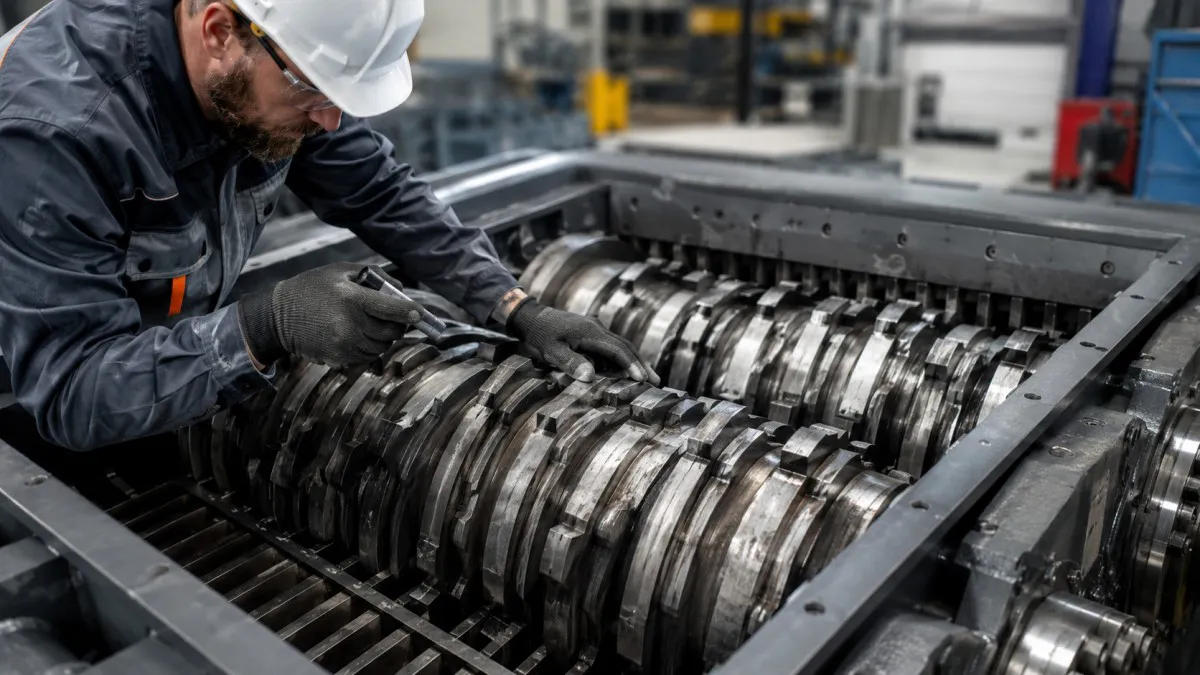
For bulky waste projects, blade design is especially important. Wider blades may provide higher throughput, while narrower blades can produce smaller discharge sizes. Hook shape, blade thickness and shaft spacing should be selected according to the material. Waste containing long fabric or wire may also require an anti-wrapping design.
A double-shaft shredder is often followed by magnetic separation, manual sorting or secondary crushing. Ferrous metal can be recovered after shredding, while wood, plastic and combustible fractions can be sent to different treatment processes.
The final system should be designed around the actual waste stream. A small furniture recycling station and a large municipal bulky waste plant will not use the same configuration. Throughput, feeding method, discharge requirements and available floor space all need to be considered.
For many bulky waste applications, the double-shaft shredder provides a practical balance between feeding ability, torque and operating stability. Its main value is not only size reduction, but also the preparation of mixed materials for the next stage of recycling.