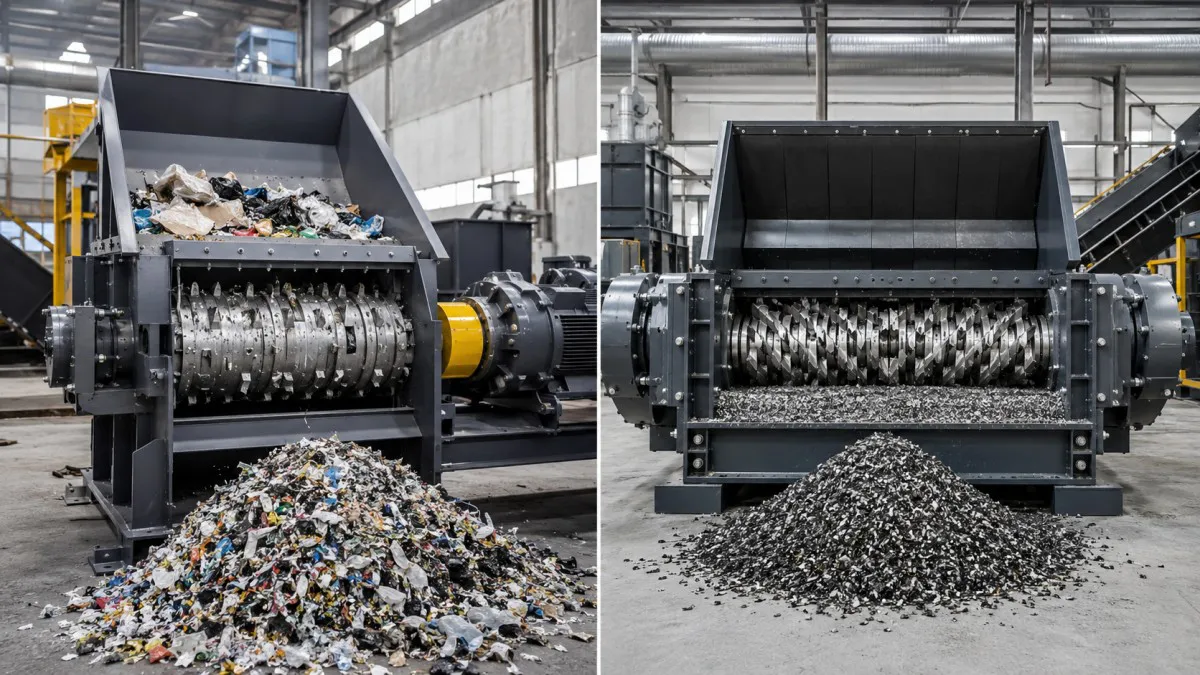
Shredder blades are wear parts, but unusually rapid wear is often a sign that something in the process needs to be adjusted. Blade material is important, but it is only one part of the problem. Feeding method, foreign objects, blade clearance and operating load can all influence service life.
One of the most common causes of blade damage is hard contamination in the material. Bearings, thick steel blocks, stones and other solid objects can create a sudden impact inside the cutting chamber. Automatic overload protection may prevent damage to the motor, but it cannot completely eliminate local stress on the blade edge.
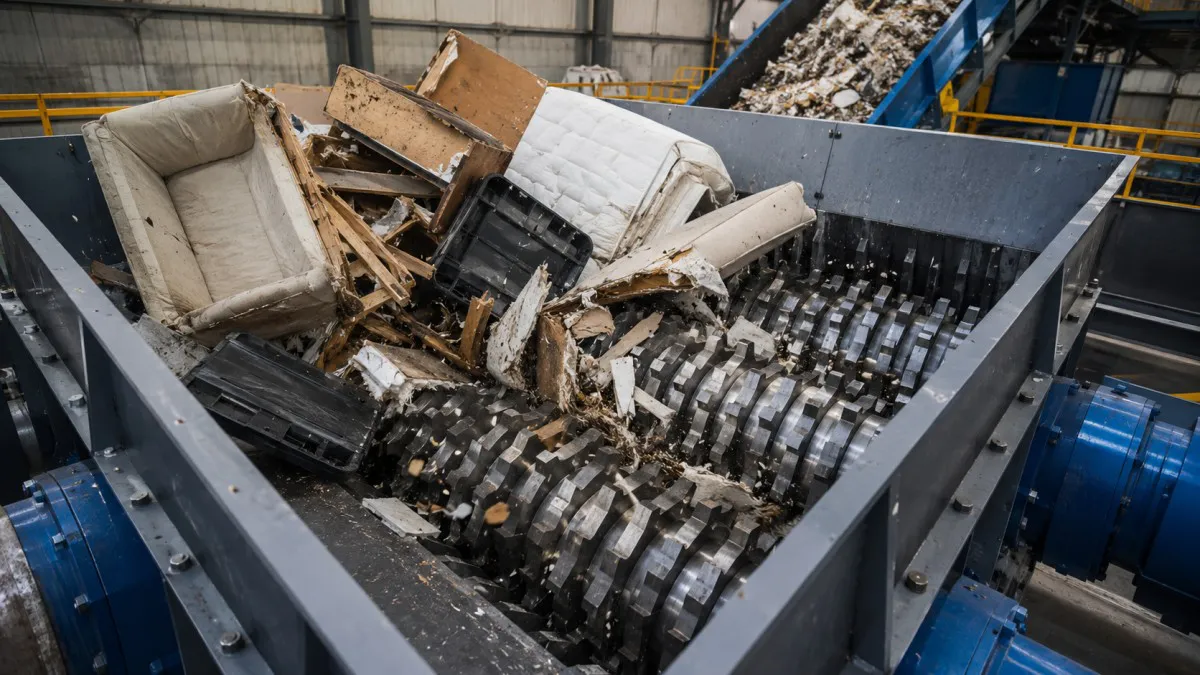
Uneven feeding is another frequent issue. When a loader drops too much material into the hopper at once, the cutting chamber may remain overloaded for long periods. The shafts reverse repeatedly, and the same section of the blade can be exposed to continuous pressure. A steady feeding rate usually gives better results than filling the hopper as quickly as possible.
Blade clearance also affects performance. If the clearance is too large, the material may be pulled and squeezed without being cut efficiently. The discharge becomes larger, capacity falls and more energy is consumed. If the clearance is too small, the blades may rub against each other, increasing heat and load on the shaft and bearings.
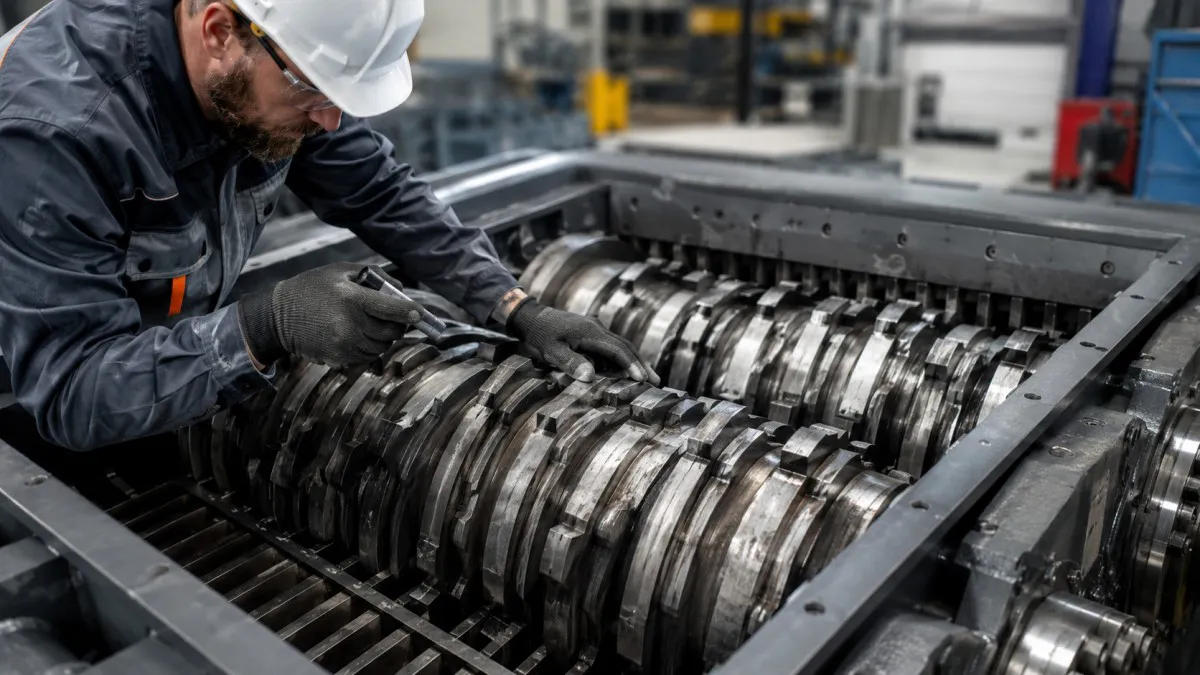
Operators should pay attention to changes in sound, vibration and current. A sudden increase in motor current, unusual friction noise or a noticeable change in discharge size can indicate blade wear or misalignment. Regular inspection is more effective than waiting for the machine to stop completely.
Maintenance intervals depend on the material. Clean plastic waste is usually less abrasive than glass-fibre-reinforced plastic, construction waste or rubber containing steel wire. Maintenance plans should therefore be based on working hours and actual wear, rather than using the same schedule for every application.
Some blades can be resharpened when the cutting edge becomes evenly dull. However, blades with deep cracks, severe deformation or large broken sections should not be repeatedly repaired. Continuing to use a damaged blade can affect the shaft, spacers and neighbouring blades.
Good maintenance also includes checking bolts, bearings, seals and lubrication points. When replacing blades, technicians should inspect the complete cutting assembly instead of focusing only on the damaged component.
Extending blade life is not achieved by selecting a harder material alone. The best results come from matching the blade design to the waste, maintaining correct clearance and keeping the feeding process under control.